Make the replacement decision
Default: finish the active Weapon, then take a replacement only when its own base record solves a named problem in this run. This assumes another useful offer is available. The cost is losing the leveled Weapon you have; a final choice also removes the other two final Weapons from that path.
- Recruit the Survivor and own the next Weapon’s skill-tree unlock.
- Raise the current Weapon to level 4. A correct path does not bypass this requirement.
- Open the next Weapon’s record. Do not add the earlier Weapon’s level rows or permanent boost to it.
- At tier 3, compare all three final choices before selecting one. The other two leave the offer pool.
- Match cadence to the decision. Magazine Weapons use firing and reload blocks; single-trigger Weapons use the cooldown block; special patterns keep unsupported cycles withheld.
- Compare the actual output change after the Attack Speed or Cooldown curve, not only the printed raw increase.
- If the replacement does not fix range, damage type, timing, or target behavior, keep the current Weapon and spend the pick elsewhere.
Every current Survivor has the same Weapon-tree shape: one tier-1 opener, one tier-2 replacement, and three mutually exclusive tier-3 choices. The current set contains 45 Weapon records across 9 Survivors. The shape is consistent; the requirements, base fields, level rows, damage types, and cadence are not.
The replacement decision is irreversible inside that path. Treat it as a new Weapon record, not a free level added to the old one.
Know when the next Weapon can appear
A later Weapon must pass every attached requirement. Check the permanent and in-run gates separately:
- The owning Survivor must be recruited for this run.
- The matching Weapon node in that Survivor’s skill tree must be unlocked.
- The previous Weapon must reach the required level, which is level 4 for the current replacement paths.
- The candidate must remain below its own maximum level.
- A tier-3 sibling must not already have been chosen.
For SWAT, needs its own skill-tree unlock and level 4. Pistol level 3 is not enough. Meeting the gates makes SMG eligible; it does not guarantee that the next random row contains it. Use the level-up offer rules after eligibility is established.
 SMG
SMG Pistol
If the Weapon never appears, do not spend Rerolls until these hard gates pass. Random selection cannot rescue a locked skill-tree node, a level-3 prerequisite, or a final choice removed by its sibling.
Read the complete path
The SWAT path shows the full pattern:
| Weapon | Tier | Requirement | First pick | Permanent boost |
|---|---|---|---|---|
| 1 | SWAT recruited | Opening weapon | Pistol | |
| 2 | Pistol level 4 | Replaces Pistol | SMG | |
| 3 | SMG level 4 | Replaces SMG | Assault Rifle | |
| 3 | SMG level 4 | Replaces SMG | Sniper Rifle | |
| 3 | SMG level 4 | Replaces SMG | Grenade Launcher |
 Assault Rifle
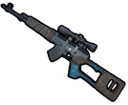 Sniper Rifle
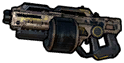 Grenade Launcher
opens the run. Its level-4 state makes eligible when the SMG unlock is owned. SMG then reaches level 4 before , , and can enter the offer pool.
The three final choices are alternatives. Assault Rifle does not lead to Sniper Rifle, and Sniper Rifle does not lead to Grenade Launcher. Selecting one disables the other two for that run. Open the full SWAT Weapon set before reaching the final pick so the choice is not made from one card description alone.
Use the same sequence for every Survivor: opener, middle replacement, three final choices. The Weapon catalog keeps all five records joined to their owner, requirement, previous Weapon, exclusive siblings, and exact level rows.
Separate replacement from another level
Repeating the exact Weapon and choosing a replacement are different operations.
When you repeat the active Weapon, the next stored level row applies to that Weapon. When you choose a later tier for the first time, the later Weapon replaces the active record and starts at level 1. It uses its own base fields, permanent boost, and future level rows.
For the Pistol to SMG step:
- SMG replaces Pistol on the first SMG pick.
- Pistol’s in-run level changes do not carry into SMG.
- The permanent Pistol boost remains scoped to Pistol.
- SMG uses the permanent SMG boost and its own level rows.
- Later SMG picks apply SMG level changes, not another copy of the Pistol rows.
This is why a fresh replacement can look weaker in one visible field than the level-4 Weapon it removes. The old Weapon had three repeat picks behind it; the replacement begins from its own base record. Judge the new behavior and full remaining path, not an imagined sum of both records.
The boundary is exact-Weapon ownership. Do not generalize this rule to final Ability branches; those use a different permanent-boost relationship and belong to the Ability domain.
Read exact level changes
Each current Weapon has three repeat-pick rows. Pistol is the golden example:
| Repeat pick | Exact changes |
|---|---|
| Level 1 to 2 | Damage +10, Fire rate +0.5 |
| Level 2 to 3 | Magazine size +3 |
| Level 3 to 4 | Damage +10, Fire rate +0.5, Magazine size +6 |
These rows belong only to Pistol. The last Pistol repeat adds Damage +10, Fire rate +0.5, Magazine size +6. The first SMG pick does not preserve those values as hidden SMG additions.
Open Pistol directly to see its base record, all three rows, SMG requirement, complete SWAT path, and supported first-shot cycle in one view. Follow any linked Weapon to compare the replacement’s own rows.
Compare only supported timing
Start with cadence. A familiar Weapon name is not enough to select a timing formula.
All 45 current weapons
An ordinary magazine Weapon supports fire rate, shot interval, reload, firing window, first-shot cycle, and sustained triggers. A single-trigger Weapon supports its ordinary cooldown and matching reload-animation speed, but it has no magazine firing phase. A special no-magazine pattern keeps ordinary fire, cycle, and payload fields withheld.
is single-trigger. and are special patterns. Their attacks do not follow the ordinary magazine model, so the Weapon page does not label them with regular fire-rate, projectile-total, or first-shot-cycle results.
 Bow
Bow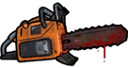 Chainsaw
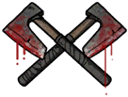 Axerangs
Open the Weapon reference and choose one record to verify which cadence fields it supports. If a field is withheld, that Weapon does not support that calculation. Use only the displayed fields.
Apply Attack Speed and Cooldown
Raw Attack Speed and Weapon Cooldown Reduction pass through separate effective-value curves. Attack Speed stays linear through 200% raw. Cooldown Reduction stays linear through 25% raw. Above those thresholds, another raw point adds less to the effective result.
Raw value to effective value
| Raw Attack Speed | Effective Attack Speed | Raw Cooldown | Effective Cooldown |
|---|---|---|---|
| 100% | 100% | 0% | 0% |
| 200% | 200% | 25% | 25% |
| 300% | 266.67% | 100% | 55.00% |
| 500% | 350% | 500% | 82.83% |
Attack Speed starts diminishing above 200% raw. Weapon Cooldown Reduction starts diminishing above 25% raw. The 500% playable raw cap becomes 350% effective Attack Speed and 82.83% effective Cooldown Reduction.
At 300% raw Attack Speed and 100% raw Cooldown Reduction, the current curves produce 266.667% effective Attack Speed and 55% effective Cooldown Reduction. Compare the effective change from the current value to the proposed value; two cards with the same printed raw increase do not promise the same gain late in a run.
For an ordinary magazine Weapon:
final triggers per second
= (base triggers per second + level-row additions)
× effective Attack Speed
actual reload
= (base reload seconds - level-row reductions)
× (1 - effective Cooldown Reduction)Final fire rate is clamped between 0 and 100. Ordinary reload is clamped between 0.01 and 100 seconds. Attack Speed changes the firing block; Cooldown Reduction changes the reload block.
The first shot starts immediately, so a magazine with N shots has N - 1 intervals before reload:
firing window = (magazine size - 1) ÷ final triggers per second
first-shot cycle = firing window + actual reload
sustained triggers per second = magazine size ÷ first-shot cycle
Pistol base-record example
- Intervals before reload
- 9 shots - 1 = 8
- Firing window
- 8 ÷ 2 = 4.00s
- First-shot cycle
- 4.00 + 1.75 = 5.75s
- Reload share
- 1.75 ÷ 5.75 = 30.4%
- Long direct trigger
- 50 × 1 × 0.75 = 37.5
The first shot happens immediately. Each later shot starts a 0.5-second timer, and the ninth shot empties the magazine before reload begins.
Base Pistol uses 9 shots, 2 triggers per second, and a 1.75-second reload. Its firing window is 4 seconds and its first-shot cycle is 5.75 seconds. Using 9 ÷ 2 for the firing window invents an interval before the first shot.
For Bow and other single-trigger Weapons, Attack Speed does not add a magazine phase. Compare the ordinary cooldown row. For a special pattern, use only the fields the Weapon page marks as supported.
Keep range and damage separate
Range does not change fire or reload timing. The stored close, medium, and long multipliers apply to eligible direct hits, while damage over time remains a separate base field.
Strongest stored range band
| Peak band | Weapons | Share of 45 |
|---|---|---|
| Close | 18 | 40.0% |
| Medium | 6 | 13.3% |
| Long | 7 | 15.6% |
| Close + Medium | 2 | 4.4% |
| Medium + Long | 5 | 11.1% |
| Close + Medium + Long | 7 | 15.6% |
At Long range, base Pistol uses a 0.75x multiplier. Its base direct trigger changes from 50 to 37.5. That is a direct-trigger lookup, not DPS.
is DoT-only in its published base record, so the page does not fabricate a direct trigger payload for it. Penetration, target count, misses, critical hits, area, status duration, tags, enemy defense, and temporary effects also stay outside a timing-only result. When a Weapon has penetration, the page states that it exists but does not claim an exact target limit or per-target falloff.
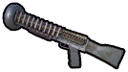 Tesla
TeslaUse the damage-type destination when the replacement decision depends on tag support or a status threshold. Use the Weapon page for the exact base record and range multipliers.
Diagnose a missing or bad replacement
Check the failure in this order:
- The path is wrong. Open the current Weapon and follow its own next-tier link. Do not jump between Survivors or sibling finals.
- The skill-tree unlock is missing. Buy the named Weapon node before expecting the in-run card.
- The previous Weapon is not level 4. A level-3 opener or middle Weapon does not satisfy the next requirement.
- A sibling final was already chosen. The other two final Weapons are removed for this run.
- The candidate is eligible but absent from this row. Only now use the level-up offer, Reroll, Lockdown, Banish, and Skip rules.
- The old level rows were added to the new Weapon. Remove that assumption and compare the replacement’s base record plus its own later rows.
- A special cadence was forced into the magazine formula. Keep unsupported fire, payload, and cycle values withheld.
- Raw stat size was mistaken for effective gain. Run the current and proposed values through the curves.
- A partial direct value was called DPS. Keep timing, range, DoT, status, targets, and defense separate.
A bad replacement is not always a rules failure. It may be eligible and correctly calculated while still solving the wrong problem. State the problem first: close-range pressure, long-range priority targets, damage-type support, reload exposure, or another concrete constraint.
Check one path step by step
Open all 45 Weapons or start from SWAT. Select the current Weapon and read Requirement, First pick, Permanent boost, Earlier run changes, and Final choice cost in order.
For a final decision, inspect each tier-3 card in turn before selecting one. Check damage type, cadence, direct or DoT basis, range peaks, and exact level rows. If timing matters, open the candidate’s record and use only its supported starting-stat cadence fields. Share the filtered path URL when another player needs the same starting point.
If the replacement solves the named problem and its opportunity cost is acceptable, take it. If it does not, keep the current Weapon and spend the choice on another eligible part of the build. Eligibility answers whether a card can appear; it does not make the card correct for every run.
FAQ
Do Pistol upgrades carry into SMG?
No. SMG replaces Pistol and uses its own base record, permanent boost, and later level rows. Pistol’s in-run changes and permanent Pistol boost remain scoped to Pistol.
Why is SMG still missing after Pistol reaches level 4?
Check the SMG skill-tree unlock first. If the unlock and level requirement both pass, SMG is eligible but may still wait for a later random offer row.
Can I take all three final Weapons?
No. Choosing one tier-3 Weapon disables the other two final choices in that Survivor’s path for the run.
Does Attack Speed shorten reload?
No. Attack Speed changes the ordinary magazine firing rate. Weapon Cooldown Reduction shortens the reload or the ordinary single-trigger wait.
Does Attack Speed help Bow?
Bow uses single-trigger cadence. The supported ordinary timing result is its cooldown; the page does not invent a magazine fire-rate phase.
Why is the Pistol cycle 5.75 seconds?
The first shot starts immediately. Nine shots contain eight 0.5-second intervals, giving a 4-second firing window, followed by the 1.75-second reload.
Why does the page not show DPS for every Weapon?
The published base fields do not determine misses, critical hits, target count, penetration behavior, area, status duration, tags, enemy defense, and every temporary effect. A partial total would be mislabeled as DPS.